 by Teva
Building Autonomous Business Applications With AI Agents: A Guide for Modern Businesses
Businesses today are looking for smarter ways to manage operations, reduce repetitive tasks, and improve decision-making. Traditional software helps organizations complete specific tasks, but modern technology offers something more advanced: systems that can analyse information, make decisions within defined limits, and perform actions with minimal human intervention. This is where building autonomous business applications becomes valuable for companies seeking greater efficiency, productivity, and scalability.
AI agents are changing how businesses interact with software. Instead of waiting for instructions at every stage, these intelligent systems can interpret requests, plan tasks, use approved tools, and adjust their actions based on results. From customer service and financial operations to inventory management and employee administration, autonomous applications can help businesses operate more effectively while keeping human oversight where it matters most.
What Are Autonomous Business Applications?
Autonomous business applications are software systems designed to perform tasks, coordinate workflows, and respond to changing conditions with limited manual intervention. They often combine artificial intelligence, business rules, APIs, databases, and workflow automation to complete activities that would otherwise require several manual steps.
For example, a customer support application could use an AI agent to classify incoming complaints, retrieve relevant customer records, suggest solutions, and prepare responses for approval. In a logistics business, an agent could monitor delivery updates, identify delays, and notify the appropriate team. These practical applications demonstrate how building autonomous business applications can help organisations improve service delivery without removing the need for human judgement.
How AI Agents Power Autonomous Business Software
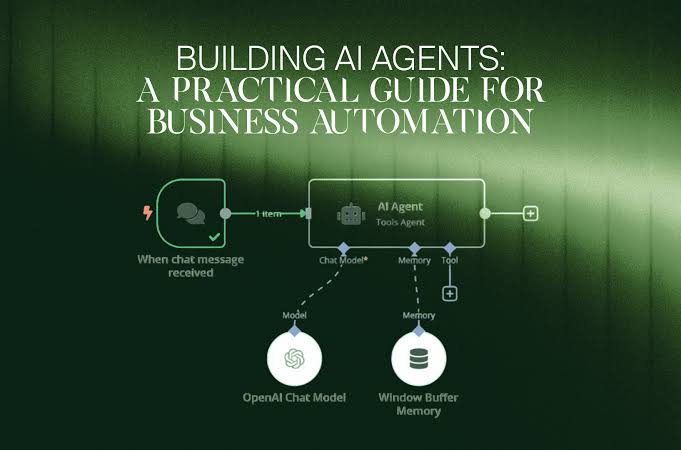
AI agents serve as the decision-making and task-execution components of autonomous applications. Depending on their configuration, they can interpret natural-language requests, retrieve information, plan actions, call external tools, and evaluate whether a task has been completed successfully.
Several technologies work together to support these capabilities. Large language models (LLMs) interpret instructions and generate responses, while retrieval-augmented generation (RAG) enables applications to retrieve relevant information from approved documents and databases. APIs connect agents to business systems, and workflow engines manage tasks that require predictable sequences of actions.
When building autonomous business applications, developers must determine which decisions an agent can make independently and which require human approval. An agent may automatically categorize a support ticket, for instance, but issuing a large refund or changing a customer’s financial records should require appropriate authorization.
Key Business Applications of AI Agents
AI agents can support different departments depending on an organisation’s operational needs. Their greatest value often comes from connecting previously disconnected processes and reducing the amount of manual coordination required.
Common applications include:
- Customer service: Classifying enquiries, retrieving customer information, recommending solutions, and escalating complex complaints.
- Finance and accounting: Organising invoices, identifying unusual transactions, reconciling records, and preparing financial summaries.
- Human resource management: Answering employee questions, coordinating onboarding activities, and organising recruitment documents.
- Sales and marketing: Qualifying leads, updating customer relationship management (CRM) records, and preparing personalized follow-ups.
- Inventory and logistics: Monitoring stock levels, identifying potential shortages, and notifying teams when deliveries are delayed.
- Enterprise operations: Coordinating approvals, generating reports, and routing requests to the appropriate departments.
For companies considering building autonomous business applications, the most suitable starting point is a repetitive, measurable process where automation can deliver clear operational benefits.
The Development Process: From Idea to Deployment
Creating an effective autonomous application requires more than connecting an AI model to a database. The system must understand the business objective, operate within defined boundaries, and produce results that can be evaluated.
Identify the Business Problem
Start by selecting a workflow that consumes significant time or resources. Interview the employees responsible for the process, document existing challenges, and identify the expected outcome. Establish measurable targets, such as reducing response times or improving invoice-processing accuracy.
Define the Agent’s Responsibilities
Specify the tasks the agent can perform, the information it can access, and the actions it is permitted to take. Establish clear restrictions for sensitive activities, including payments, customer-data changes, and account access.
Select the Right Technology
Depending on the project’s requirements, the development team may use Python, TypeScript, cloud platforms, LLM APIs, vector databases, and agent orchestration frameworks. Technologies should be selected based on security, integration requirements, expected traffic, and the team’s technical capabilities.
Build and Integrate the Application
Develop the user interface, backend services, database structure, and connections to existing business systems. During building autonomous business applications, developers should ensure that agents receive reliable information and use authorised tools rather than relying entirely on generated responses.
Test, Deploy, and Improve
Test the application using realistic business scenarios, including incorrect information, failed API calls, unexpected requests, and attempts to bypass permissions. After deployment, monitor accuracy, response times, operating costs, and user feedback. Regular evaluations help teams identify weaknesses and improve performance over time.
Essential Technologies for Autonomous Applications
The technology stack depends on the application’s complexity, but several components commonly support reliable agent-based systems.
Large language models provide language understanding and reasoning capabilities. Frameworks such as LangChain and Microsoft Semantic Kernel can support agent workflows and integrations. Python and TypeScript are useful for backend development, while PostgreSQL and vector databases can manage structured records and searchable knowledge.
Cloud services provide computing resources, monitoring, and deployment infrastructure. Containerization tools such as Docker can improve deployment consistency, while identity management, encryption, logging, and access controls help protect sensitive business information.
Successful building autonomous business applications also requires reliable integration with existing ERP, CRM, payment, and human resource platforms. The best technology is not necessarily the newest; it is the combination that meets the business requirements securely and cost-effectively.
Benefits of Building Autonomous Business Applications
One major advantage is operational efficiency. AI agents can handle repetitive activities, allowing employees to concentrate on complex problems, customer relationships, and strategic decisions. Businesses may also improve response times by automating routine enquiries and reducing delays between departments.
Another benefit is scalability. A well-designed application can support growing workloads without requiring every additional task to be handled manually. Organisations can also gain better visibility into their operations through automated reports, activity logs, and performance dashboards.
For companies investing in building autonomous business applications, these benefits must be measured against implementation costs, ongoing model usage, infrastructure expenses, and the effort required to maintain reliable systems. Automation delivers the strongest results when it addresses a genuine business problem rather than adding unnecessary complexity.
Security, Governance, and Human Oversight
Autonomy does not mean giving software unrestricted access to business operations. AI agents can misunderstand instructions, generate inaccurate information, or take inappropriate actions when their tools and permissions are poorly configured. Businesses must therefore treat security and governance as core development requirements.
Recommended safeguards include role-based access control, encrypted data transmission, audit logs, approval workflows, rate limits, and clear restrictions on high-impact actions. Developers should also test for prompt injection, unauthorised data access, and unsafe tool usage.
When building autonomous business applications, organisations should use human approval for sensitive transactions, establish procedures for reversing incorrect actions, and define clear accountability for automated decisions. Continuous monitoring is essential because business processes, data sources, and AI models can change over time.
How Much Does It Cost to Develop Autonomous Business Software?
The cost of building autonomous business applications depends on the number of agents, integration complexity, security requirements, interface design, and deployment environment. The following figures are illustrative planning estimates rather than fixed market prices.
- Basic AI-powered application: Approximately $5,000–$15,000 for a limited workflow, basic integrations, and a simple interface.
- Mid-level autonomous business application: Approximately $15,000–$50,000 for multiple workflows, database integrations, monitoring, and more advanced agent capabilities.
- Enterprise-grade solution: Approximately $50,000–$150,000 or more for complex integrations, stronger governance, advanced security, and extensive testing.
Ongoing expenses may include cloud hosting, AI model usage, software maintenance, monitoring, and technical support. These costs vary considerably with usage and architecture. Businesses should begin with a clearly defined minimum viable product (MVP), validate its performance, and expand the system as measurable benefits emerge.
The Future of Autonomous Business Applications
Can AI agents eventually manage entire business operations independently? They may increasingly coordinate complex workflows, but fully autonomous operations are not appropriate for every industry or decision. Financial approvals, legal obligations, sensitive customer interactions, and other high-impact activities will continue to require carefully designed controls and human accountability.
As AI models, integration tools, and monitoring capabilities improve, building autonomous business applications will become an increasingly practical option for organisations that want to modernize their operations. Businesses that start with focused use cases, reliable data, and responsible governance will be better positioned to adopt more advanced capabilities.
Conclusion
Building intelligent software is no longer just about automating individual tasks; it is about creating connected systems that can interpret information, coordinate workflows, and support better business decisions. With the right architecture, AI agents can improve productivity, reduce repetitive work, and help organisations scale their operations more effectively.
However, successful implementation requires proper planning, secure integrations, continuous testing, and a clear understanding of the business objectives. Techvantage Innovations helps businesses explore and develop custom software solutions tailored to their operational needs, from AI-powered applications and business automation to enterprise software and scalable digital platforms.
If your organisation is ready to improve efficiency and prepare for the next generation of intelligent software, reach out to Techvantage Innovations to discuss your requirements and build a solution designed around your business goals.