 by Teva
Ruby on Rails: Top Option for Marketplaces
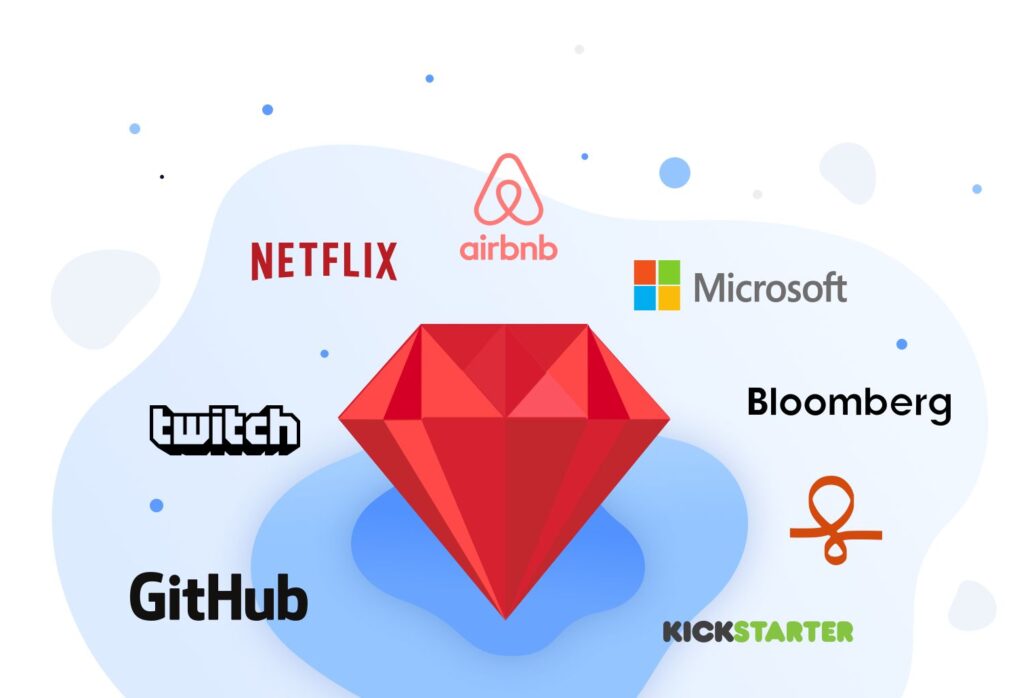
Launching a successful online marketplace requires a balance between speed, scalability, and long term reliability which is what Ruby-on-Rails has been doing best at that. From startups which are disrupting legacy industries to large companies which are extending into multi vendor platforms marketplaces require quick development, secure structures, and flexibility for growth. That is what the philosophy and structure of Ruby on Rails which in turn support that a mature environment which fuels innovation without over complicate things.
Why Marketplaces Demand the Right Framework
Marketplaces are at their core very complex digital products which tend to include elements of user management, vendor on board, payment processing, messaging systems, reviews, and analytics in one package. Ruby-on-Rails does an excellent job of dealing with that complexity. Also unlike simple sites which are more static, marketplaces are in a constant state of evolution based on what users do and what is happening in the market. Thus a framework must support clean code, easy iteration, and predictable scaling also it has to do so in a way which keeps development and maintenance costs down.
Rapid Development and Time-to-Market Advantage
Ruby-on-Rails is a primary choice among companies for marketplace development because it’s focused on the “convention over configuration” approach. This principle which in turn allows teams to put more energy into business logic instead of the same old setup issues. Also as a result of this we see marketplaces go from concept to live product much faster, which in very competitive markets that live by first and early mover advantage is very important. Also with speed of development comes speed of feedback from real world use which in turn enables founders to improve features based on what is actually in demand as opposed to what we think should be.
Scalability for Growing Marketplace Ecosystems
A common thought is that which Ruby-on-Rails is for only small scale projects but in fact many high traffic platforms have proved that wrong. When properly architected Rails applications do in fact scale out and up to support from a few thousand to over a million users. In the case of marketplaces this means the ability to handle a growth in the number of vendors, an increase in transaction volume, and expansion of feature sets without re writing the entire platform. With the right infrastructure choices Rails may grow along with the business which it supports.
Built-In Security and Trust for Transactions
Trust is a base component of any market which is what Ruby-on-Rails provides via its robust and inbuilt security features which in turn protect both users and vendors. From solid authentication systems to protections against common web based attacks, Rails also includes what it takes to reduce security issues which come up during the development phase. Also for businesses which put out payment info, personal records, and transaction logs through their site, a breach is a major blow to brand trust and image.
Cost Efficiency and Long-Term Maintainability
Beyond what is included in initial build out, marketplaces also have to be maintained as they grow, and here Ruby-on-Rails does very well. With its simple and clean code structure as well as the large set of best practices that the community has put together, it is easy for new team members to get up to speed and add to the code base. This in turn also brings down the long term maintenance cost and we see that issue of technical debt come up less often for fast growing systems. For businesses that are looking at growth that will be sustained over the long term, Rails gives that balanced approach which also includes strong performance and very reasonable price point.
A Mature Ecosystem and Community Support
Ruby on Rails’ wide range of resources is also what sets it apart for marketplaces. We see a large number of well maintained libraries and plugins which cover the common issues of payments, search, background jobs, and notifications. This mature ecosystem is an asset, offering reduced development time and lower risk through previously proven solutions in real-world applications. Also we have a very strong international community which is behind continuous improvement and which also provides very reliable support.
AI’s role in today’s marketplaces
How do we see past using AI to only improve our processes which we in turn put into automation, and instead to use it in creating better relationships between buyers and sellers?
Conclusion: Partnership for Marketplace Success
Choosing the best technology is a strategic move which Ruby-on-Rails proves to be a which is flexible and business focused for the development of modern marketplaces. It’s a framework that supports quick development, secure transactions, growth and future tech integration which makes it the perfect choice for0 and organizations. If you are looking to build or scale a marketplace that is reliable, adaptive, and forward looking in terms of AI growth, clients should approach Techvantage Innovations to turn their vision into a high performing digital platform.
