 by Teva
How to Use MongoDB for Document-Based NoSQL Databases
Today, digital apps require increased functionality that is not readily supported by the capabilities of relational databases. This is where document-oriented NoSQL databases fit in. They make use of the flexible schema design that matches well with agile development methodologies and is aligned well with rapidly changing requirements. Using MongoDB for Document-Based NoSQL Databases has proven to be the best available alternative for companies that develop data-driven web and mobile apps that require various types of data and feature increased transaction volumes without affecting speed.
MongoDB as a Document Database
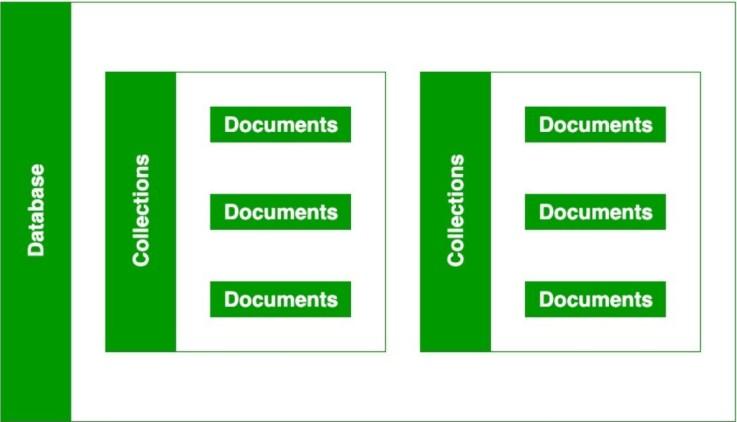
MongoDB is a top document NoSQL database; therefore, it supports storing data in flexible and JSON-like style documents called BSON. Consequently, this makes it possible to define data representation in a way very close to application objects. Furthermore, MongoDB NoSQL for Document NoSQL Applications will make it possible to work with nested documents and arrays, dynamic fields, and, as a result, will help to model real objects like users, transactions, and content in a natural and efficient way.
Defining the Document-based Data Model
Data modeling plays an important role for the successful execution of any NoSQL database. In MongoDB, there is a paradigm shift for other databases from normalization to a technique of embedding documents wherever suitable. This reduces the operations of read and provides excellent performance to applications. Access patterns are crucial for applications utilizing MongoDB for document-based NoSQL storage and access.
CRUD Operations and Querying Documents
MongoDB supports CRUD operations with a simple querying language. Developers can create complex queries, filters, and aggregations on documents with less overhead when dealing with documents. Applications that need fast access to semi-structured documents are best served by “Using MongoDB for Document-Based NoSQL Applications.” This often takes the form of querying and retrieving documents with subfields or array fields.
Indexing and Performance Optimization
Performance optimization in MongoDB focuses on effective index design to enhance query speed. Proper handling of single-field, compound, and text indexes is crucial, as poorly managed indexes can introduce overhead and negatively impact overall database performance.
Scalability | Replication | High Availability
One of the primary advantages of MongoDB is that it supports horizontal scaling in an aggregated manner using the concept of shredding, as well as high availability using the concept of replica sets. This allows the application to scale with agility while ensuring redundancy and availability. Using MongoDB in document-based no SQL databases will ensure that the system is scalable and highly available even under heavy loads.
Data Protection, Shareholders, and Social Responsibility
With the increase in the volume of data, there is a concern regarding security and compliance. MongoDB has end-to-end security measures such as role-based access control, encryption at rest, and encryption in transit, and it also has auditing functionality. Document-Based NoSQL Applications using MongoDB will enable organizations to implement highly disciplined data governance while harnessing the flexibility and speed associated with the NoSQL model.
MongoDB: An Introduction to Its Uses in AI
Finally, MongoDB also seamlessly supports modern AI/machine learning processes, such as large-scale data ingestion and real-time analytics, which helps many AI-related applications use it for their training results, inference, and user logs. MongoDB’s application in Document-Based NoSQL Databases offers strategic advantages for businesses, integrating AI-powered intelligence to enhance database applications and user experiences.
Conclusion
MongoDB is a strong, flexible platform for creating modern, scalable, high-performance, document-based NoSQL applications. In regards to data modeling and querying, security features, as well as AI integration solutions; “Using MongoDB for Document-Based NoSQL Applications” is a resource that provides a company or business with all the necessary capabilities to be able to innovate and sustain growth in a data-driven environment. Companies or businesses that require assistance or optimization ideas regarding MongoDB applications should contact Techvantage Innovations.
